oTMS LISTED AS A NOTABLE VENDOR IN ASIA/PACIFIC CONTEXT: MAGIC QUADRANT FOR TRANSPORTATION MANAGEMENT SYSTEMS

所属行业
客户规模
核心需求

SHANGHAI, CHINA – April 8, 2020: oTMS, a leader in cloud transport management platform in China, today announced that it is listed as a Notable Vendors in 2020 Asia/Pacific Context: ‘Magic Quadrant for Transportation Management Systems’* published by Gartner, Inc., the world’s leading information technology research and advisory company.

Mirek Dabrowski, oTMS, CEO and co-founder, commented: “I am excited oTMS has been mentioned in Asia/Pacific Context: ‘Magic Quadrant for Transportation Management Systems by Gartner since 2018. oTMS has been committed to digitalization and innovation since it’s established. Relying on the trust of many customers, on top of TMS, we have helped many customers achieve digitalization of transportation through technology outsourcing services, while reducing transportation costs and improving transportation service levels.”

With the deepening of transportation digitalization, transportation management system has gradually become the basic construction of transportation management. “Gartner estimates that the total TMS market size in 2019 was $1.63 billion. The Asia/Pacific region is estimated to account for 13% of the global TMS market. While the Americas and EMEA continue to have the largest market shares, the Asia/Pacific market is expected to grow 30% to 40% faster between 2019 and 2023.”

In the report, Gartner suggests: “Supply chain and IT leaders in Asia/Pacific companies, or in global organizations with significant transportation operations located in Asia/Pacific, should consider the vendors in this research alongside those in the ‘Magic Quadrant for Transportation Management Systems.’”

Since the launch of oTMS’s transportation management system, it has been recognized by many large and medium-sized shippers because of its pioneering SaaS TMS + APP model and transparent and visible features. It connects manufacturers, carriers, drivers, distributors & retailers on the same platform to manage carriers, shipments, freight billing and performance analysis. Today, oTMS is one of the leading TMS vendors in the Chinese market and has more than 5,800 carriers and 230,000 active drivers on its TMS and bid platform.

In 2017, oTMS launched a technology transportation outsourcing service, dedicated to the integration of intelligent technology and professional operations, to help shippers to achieve sustainable cost savings and service improvement.

In the future, oTMS will continue to lead the way, providing customers with outstanding solutions, accelerating the digital transformation of the industry and making transportation smart.

* Asia/Pacific Context: ‘Magic Quadrant for Transportation Management Systems’ by Brock Johns, Bart De Muynck, Oscar Sanchez Duran. April 2, 2020.

Gartner Disclaimer

Gartner does not endorse any vendor, product or service depicted in its research publications, and does not advise technology users to select only those vendors with the highest ratings or other designation. Gartner research publications consist of the opinions of Gartner’s research organization and should not be construed as statements of fact. Gartner disclaims all warranties, expressed or implied, with respect to this research, including any warranties of merchantability or fitness for a particular purpose.

About oTMS

Created in 2011, oTMS is the leading cloud transport management platform in China, committed to Making Transport Smart. Today, oTMS provides oneTMS – cloud transport management system and Orange – comprehensive transport outsourcing service. Covering procurement, management, payment and analysis, oTMS helps customers quickly optimize their supply chain, reduce costs, increase effectiveness and keep innovation. For more information: www.otms.com


Press Contacts:

Jiling Zheng

Jiling.zheng@otms.com
oTMS LISTED AS A NOTABLE VENDOR IN ASIA/PACIFIC CONTEXT: MAGIC QUADRANT REPORT FOR TRANSPORTATION MANAGEMENT SYSTEMS

所属行业
客户规模
核心需求

SHANGHAI, CHINA – July 8, 2019: oTMS, a leader in cloud transport management platform in China, today announced that it’s listed as a Notable Vendors in 2019 Asia/Pacific Context: ‘Magic Quadrant for Transportation Management Systems’ is published by Gartner, Inc., the world’s leading information technology research and advisory company.

“I am excited oTMS has been mentioned in Asia/Pacific Context: ‘Magic Quadrant for Transportation Management Systems by Gartner since 2018 (2 times straight). We believe this validates our pioneer efforts here and growing potential for modern TMS solutions in Asia overall. Transport digitization is a strong trend in the years to come.” said Mirek Dabrowski, oTMS, CEO and co-founder.

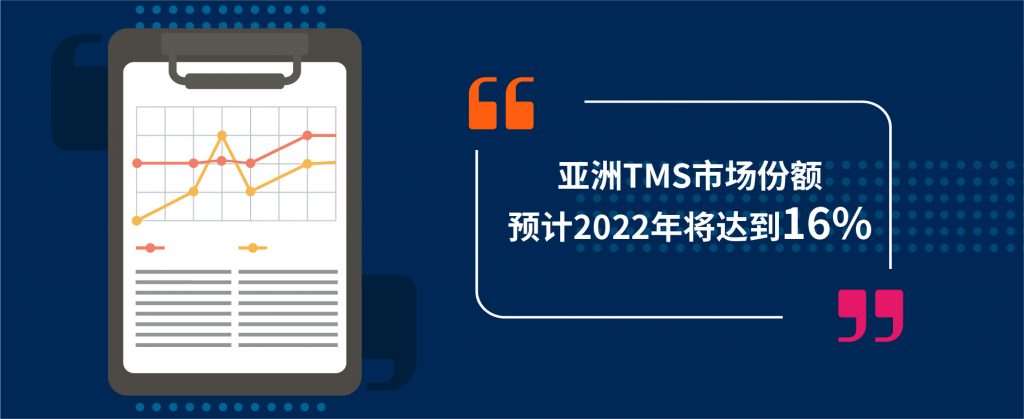
According to Gartner, “The global TMS market is expected to reach $2.2 billion by 2022. While the Americas and EMEA continue to have the largest market shares, the Asia/Pacific market is expected to have the highest growth rate and reach a market share of 16% by 2022 (see “Key Considerations for Supply Chain Leaders Evaluating Transportation Management Systems”).

“China remains a growing economy with the third largest transportation market after the U.S. and Europe. Although few Chinese companies have used TMSs in the past, we see large opportunities in this market.”


In the report, oTMS listed as Specialist TMS vendors, which are independent software vendors (ISVs) that focus primarily or exclusively on holistic TMS, although they might offer some additional capabilities.
Noticing the growing needs from Chinese customers, oTMS has started to offer comprehensive transport outsourcing service since 2017. After two years investment, oTMS has helped customers achieve significant savings.

* Asia/Pacific Context: ‘Magic Quadrant for Transportation Management Systems’ by Brock Johns, Bart De Muynck, Oscar Sanchez Duran. July 1, 2019.

Gartner Disclaimer

Gartner does not endorse any vendor, product or service depicted in its research publications, and does not advise technology users to select only those vendors with the highest ratings or other designation. Gartner research publications consist of the opinions of Gartner’s research organization and should not be construed as statements of fact. Gartner disclaims all warranties, expressed or implied, with respect to this research, including any warranties of merchantability or fitness for a particular purpose.

About oTMS

Created in 2011, oTMS is the leading cloud transport management platform in China, committed to Making Transport Simple. Today, oTMS provides oneTMS – cloud transport management system, Orange – comprehensive transport outsourcing service, FreightParatner -intelligent tendering platform, and WoWTrack – order tracking tool. Covering procurement, management, payment and analysis, oTMS helps customers quickly optimize their supply chain, reduce costs, increase effectiveness and keep innovation. For more information: www.otms.com

oTMS and JDA Launch New China Consumer Survey

所属行业
客户规模
核心需求

Shanghai, China. – October 9, 2018 – Today’s retail environment is more complex than ever, given the rise of ecommerce and a rediscovery of the age-old truth that “the customer is king.” As retailers across the globe struggle with demands for both personalization and convenience, balanced with consumer skepticism on data privacy, leading transport management platform oTMS and JDA Software, Inc., explored consumer trends in key markets in its 2018 China Consumer Survey, released today.

Shopping in-store remains the most popular experience globally (preferred by 38 percent), although online options were preferred in some of the surveyed countries. In China, over sixty-one percent of respondents say they like online shopping best. Regarding in-store shopping, Chinese respondents said that having variety of products in-store is the most important aspect of their shopping experience (25 percent), followed closely by having a unique brand experience, along with a personalized service.

With high smartphone ownership rates across many of the nations surveyed, it’s not surprising that online channels are the first stop on most shoppers’ journeys, no matter how or where they finally make a purchase. This year’s survey found that shoppers in China start searching online for clothes (29 percent), home goods (26 percent) and electronics (35 percent). Younger consumers (ages 18 to 34) said they’re more likely than average to begin their shopping journeys with recommendations from friends or family.

“This notion that stores are dying or there is a ‘retail apocalypse’ is exaggerated. Instead, this is a time for a retail rebirth,” said Patrick Viney, vice president, global industry strategies, JDA. “While the industry may refer to it as ‘omni-channel’ retailing, consumers across the globe no longer strongly distinguish between online and in-store channels. All retailers are struggling with balancing the personalization traditionally offered through e-commerce shopping with the convenience of an in-store experience. We see this time and again as more e-commerce retailers are opening brick-and-mortar shops, and traditional retailers are looking to strengthen their digital and direct-to-home fulfillment.”

Technology and the Shopping Experience

Globally, the majority of respondents who shop in physical retail stores have used some form of emerging technology such as augmented reality (AR), mobile coupons and robots in the customer experience and customers’ demand for those technologies. Despite recent headlines questioning the value of these in-store technologies, 98 percent (99 percent for China) of those who have used these technologies said that this new technology sometimes or always enhanced customer experience.

When asked about the potential of AR, 90 percent of Chinese people said they’d be somewhat or much more likely to make a purchase if they could use AR to preview the product. But among shoppers worldwide who had actually used AR technology, 60 percent said they’d be somewhat or much more likely to purchase if they could use AR to preview before buying.

According to the global survey, 40 percent of respondents have used voice-controlled devices or services for some aspect of their shopping journey (ex: Siri, Alexa, Google Home, T-mall Genie, etc.). With devices such as T-mall’s Genie we expect China to follow suit with this trend.

Image 1: Are Customers Using Voice-Controlled Devices and Services?


Returns and Store Fulfillment Seen as Convenient, Time-Saving

The convenience factor of returning items to the store continues to be the primary driver for consumers. This year’s survey showed that 96 percent of consumers look for ease of returns as a key factor in their decision where to buy when shopping online, while 83 percent would be likely to switch to an alternative retailer for future online purchases if the returns process wasn’t easy. Interestingly, customers are almost equally happy to return items to a store (28%) or have a delivery service pick them up (32%), they aren’t comfortable with postal mail (17%) or having to take their returns to a collection point (16%).


“The volume of returns is increasing for a variety of reasons. As well as customers ordering multiple sizes, more than a third of Chinese respondents (33 percent) said that they returned items instore after they intentionally bought multiple sizes or product options for their own convenience,” said Viney.  “This reverse logistics trend continues to cause problems for retailers, who are seeing repeat, serial returners. However, tangible rewards come from a good returns process: The survey showed that 82 percent of respondents claimed that they frequently or sometimes buy additional items when returning things to stores that they bought online, meaning returns can actually provide an opportunity to secure a sale by offering alternative items.”

However, the ease of returns doesn’t just apply to retailers that offer brick-and-mortar return services. According to the survey, 83 percent of those who shop for products online said that following a poor returns service from an online retailer, they were likely to switch to a different vendor for future purchases.

“Nowadays, retailers’ capabilities of online order tracking highly affect people’s choices of shopping channel,” said David Duan, co-founder and president of oTMS. “In order to meet consumers’ expectation, more and more brands are committed to building their own omni-channel logistics management capabilities, connecting factory, warehouse, store and consumer as an end to end and dynamic network to achieve real time visibility and traceability during the delivery stage.”

Product interpretation is the main factor driving customers to return online purchases to a retail store continues to be the primary driver for customers: 38 percent of respondents used this option because an item they’d purchased online wasn’t what they expected.

Methodology

This global survey was conducted by Opinium, a strategic insight agency, between late May to early June 2018. The findings are based on 12,000 online interviews with respondents in Asia (2,000 in China, 1,000 in India), Europe (2,000 in the UK, 1,000 in France, 1,000 in Germany, 1,000 in Italy, 1,000 in Sweden), North America (2,000 in the US) and Oceania (500 in Australia and 500 in New Zealand).


Click to get full research