oTMS cooperates with DSV Solutions Indonesia as its first rollout in SEA

所属行业
客户规模
核心需求

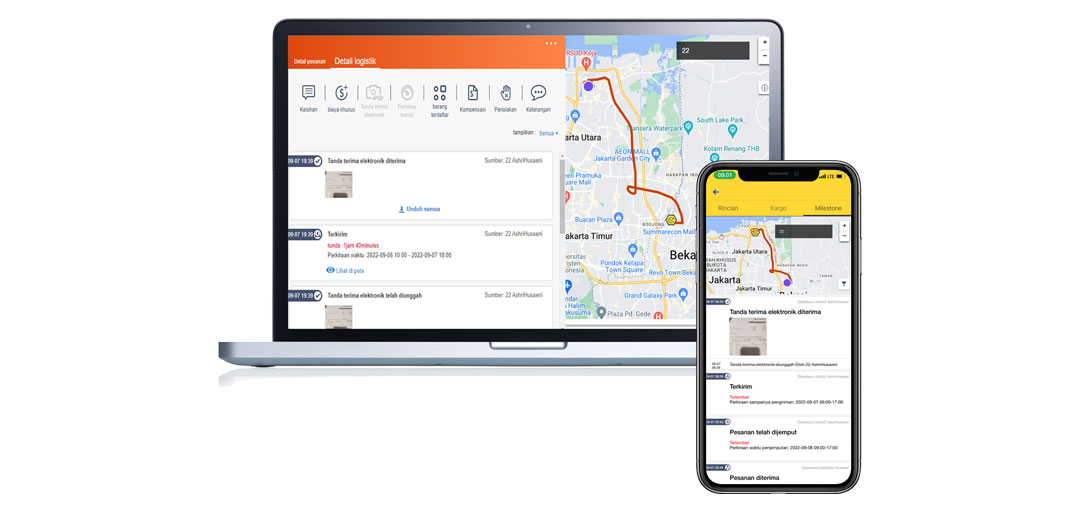
DSV Solutions Indonesia, a leading global logistics service provider, contracted oTMS for the rollout of transport management system across all of its operations in Indonesia. DSV will adopt oTMS newly launched international version of SaaS, public cloud, multi-language, multi-country solution hosted in Singapore.DSV will use oTMS to manage end-to-end transport workflow with over 1 million shipments annually for retail, fashion, telecommunications, e-commerce, and multi-level marketing brands across multiple sites in Indonesia. Diverse transport modes range from full truck with multi-stop routes, remote jobsites for telecom equipment to express deliveries for ecommerce and MLM. oTMS rollout will include integration with multiple up/downstream systems, freight cost optimization, client & carrier billing, and real-time visibility incl. notifications to their customers.
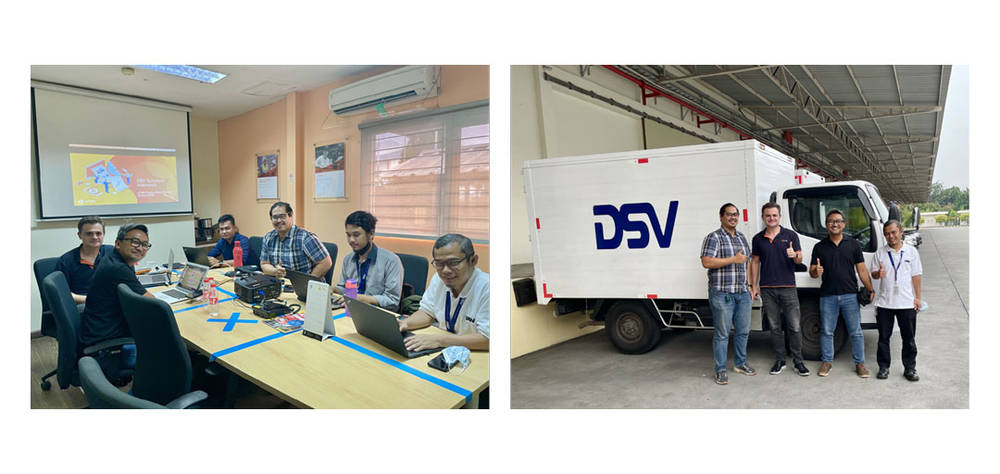
DSV is a global transportation and logistics service provider with offices and facilities in more than 90 countries on six continents, delivering and operating supply chain solutions to thousands of companies every day. Almost 10 years ago DSV Solutions China has become an important customer of oTMS rolling out multiple client’s operations over the years. Through the oTMS transportation management system, DSV China has realized the digital management of transportation.

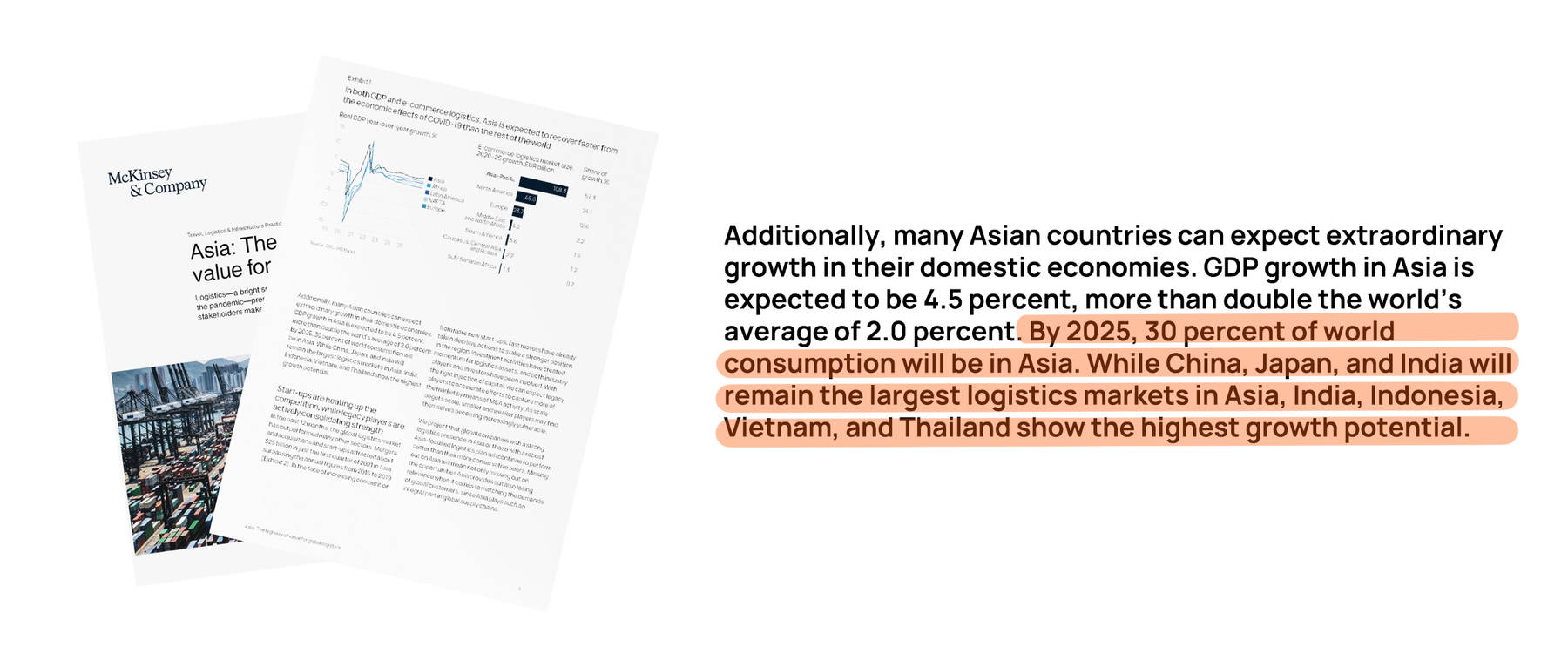
Since first launch in 2013, oTMS has won the trust of more than 100 large and medium-sized enterprises in Chinese market, has processed over 300 million orders in total, and has become the leading TMS provider in China. Today, with the rapid development of the overall Asia-Pacific market, the demand for digital transportation management in Southeast Asia is also growing. McKinsey & Company’s insight article “Asia: The highway of value for global logistics” states: “By 2025, 30 percent of world consumption will be in Asia. While China, Japan, and India will remain the largest logistics markets in Asia, India, Indonesia, Vietnam, and Thailand show the highest growth potential.” This cooperation between DSV Indonesia and oTMS is also testament to this.
Therefore, oTMS has launched an international edition of SaaS TMS independently deployed in Singapore, dedicated to helping enterprises in the Asia-Pacific region to accelerate the digitalization of their local and international logistics and transportation management systems, effectively supporting the continuous growth of their business in the Asia-Pacific region.

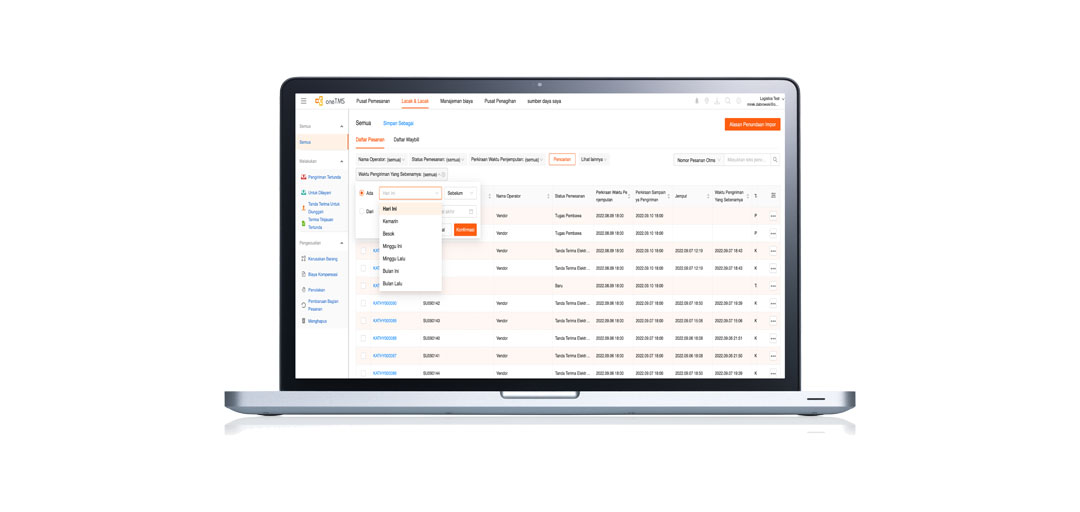
oTMS International Edition is also based on cloud-native architecture solutions, including web and mobile apps, and mainly provides the following core functions:

  1. Transportation order management, as well as order integration, splitting and other functions
  2. Full-process management of transportation to realize multi-platform collaboration of different roles on the link
  3. Real-time visualization of truck land transportation, international shipping, air transportation and express orders, and report any issues at any time
  4. Connect with mainstream express companies in Southeast Asia, realize a unified management platform for express delivery, and optimize express delivery service providers
  5. Perfect financial reconciliation function, which greatly saves reconciliation time, and the whole process is paperless handover
  6. Intelligent analysis of BI data to assist in formulating and optimizing transportation strategies

Different from the traditional TMS, oTMS transportation management system applies cloud computing, mobile Internet, and big data to the transportation industry chain, connecting work roles and processes of all parties in the transportation chain. In the initial stage of launch, facing the unique challenges of China’s transportation market, oTMS solved many problems, such as multi-layer connection, real-time on-the-fly tracking, online reconciliation, electronic receipt/signature, etc. After nearly ten years of deep cultivation, oTMS has accumulated rich experience, and the perfect system has been favored and recognized by benchmark enterprises in the industry.
Regarding the release of the international edition, oTMS co-founder and CEO Mirek Dabrowski said: “We are very excited about Southeast Asia markets where transport digitization may be a couple of years behind China, however due to certain market characteristics TMS should play even more significant role with higher ROI. oTMS grew in one of the most complex and competitive transport markets and we look forward to applying our tech 10 years of know-how to APAC region, and to enrich and localize our solutions in the process.”

In this cooperation with DSV Indonesia, the international version of oTMS also fully considers the characteristics of the local market, such as time zones, maps, billing methods, etc., and provides a bilingual system that supports English and Indonesian. The launch of the project includes customers in electronics, retail, consumer goods and other industries, helping DSV Indonesia improve overall logistics management efficiency and improve end customer satisfaction. This will also become an important step for oTMS to deploy in global markets and lay a solid foundation for the implementation of follow-up projects in Southeast Asia.

oTMS has always insisted on pioneering and innovative and will continue to enable global brands to better connect with end users through more advanced technologies and better products in the future.

What makes the “SaaS+APP” mode TMS become the standard in the APAC logistics market?

所属行业
客户规模
核心需求

A latest report, “Transportation Management Systems Market Insights – 2027”, published by Allied Market Research, states that the global transportation management system market was valued at $5,467 million in 2019, and is projected to reach $11,367 million by 2027, registering a CAGR of 9.6% from 2020 to 2027.

As an important part of the transportation supply chain, the transportation management system (TMS) aims to optimize and improve the transportation process and realize the real control of the whole cycle from cargo owners, 3PLs, carriers, drivers to customers.

With increasing complexities of logistics and transportation, the popularity of the TMS platform is continuously growing. According to recent studies, almost 35% of the businesses are now using the platform for managing their transportation network. Technically, TMS enables better transaction and communication to allow users to leverage from vast real-time data, make easier decisions, and plan & strategize for optimal transportation solutions.

The current market volatility has highlighted the significant role of the supply chains in the overall success and valuation of global corporations. Today’s supply chains are incredibly complex, with myriad partners spread across multiple regions as part of an unprecedented, intertwined global trade ecosystem. The COVID-19 pandemic has caused an enormous strain on the global supply chains as they rush to complete and ship orders as quickly as possible which is driving the adoption of transportation management systems among the end users, and accelerating the digital transformation of the transportation industry.

Preferred Mode of Transportation Management System Market

Nowadays, more and more cloud-based transportation management systems are sold as software-as-a-service (SaaS). This means that users subscribe to the technology on a monthly or annual basis instead of purchasing the technology outright. This is more cost-effective and users are always on the most recent version of the software, which provides opportunities for the overall growth of the market as well.

North America dominates the transportation management system market as the TMS industry, providing the largest revenue worldwide due to large number of players and industry columns. As the epidemic enters a normal control phase, the global supply chain is recovering in an orderly manner, international trade is growing, and the share of Asia Pacific will achieve a significant increase. And in recent years, the penetration rate of smart phones has been increasing and e-commerce in Asia Pacific has been developing rapidly. Therefore, TMS’s mobile APP mode will also gradually become the standard for the transportation management market in Asia Pacific.

The leading enterprises in various industries launched digital reform several years ago. As a pioneer of transportation management platform, oTMS has won the favor and recognition of many leading enterprises through the connecting multiple parties on a common workflow transportation management system since its launch in 2013. Using SaaS+mobile APP+API+IOT, oTMS covers road, express and multi-modal shipments within China mainland, incl. real-time visibility, freight cost management, optimization, billing, dock appointment and BI analytics.

As the Asia-Pacific region gradually keeps up with the digitalization process in North America, and the uncertainty in the global supply chain increases, enterprises need to know all the situations of their cargoes when they are transported at home and abroad to improve certainty and their own customer experience. oTMS has now realized the digital upgrade of international sea and air transportation on the product side. Through third-party pre-intergrating with shipping and air cargo companies as well as major ports and customs, it enables import and export logistics tracking and enhances overseas information control. This coverage keeps expanding.

In an complex environment, transportation management system is an important foundation for enterprises to move towards refined and intensive management. Especially for large enterprises with multinational business, increasing the digital transformation of logistics can accumulate more power to improve comprehensive competitiveness. oTMS always insists on pioneering and innovation to help enterprises’ business growth through advanced technology and perfect products.

oTMS adds real-time visibility for global air and ocean shipments, extending its shipment tracking coverage beyond China borders.

所属行业
客户规模
核心需求

Since the outbreak of COVID-19 in 2020, foreign trade experienced difficult times, including difficulties in resuming work, cancellation of orders, foreign trade restrictions, sky-rocketing freight rates and other obstacles mounted. Even as COVID-19 epidemic is largely over, other geo-political events continue to cause trade and shipping disruptions, exposing legacy supply chain fragility in these “new normal” circumstances. What measures should companies take to improve their international logistics management and control capabilities and boost their confidence? Adding comprehensive visibility for their import and export shipments across all the transport modes, end-to-end is going to significantly boost their ability to manage their inventory in transit, identify bottlenecks in their supply chains and compare carrier performance against their promised SLAs.

International air and sea freight rates are still close to their peak levels and while carriers and forwarders offer various products with different lead-times it is paramount to track their performance and compare it against both their promises and other alternatives.

Same time, supply chain and shipping disruptions can cause delivery dates promised to the customers to slide significantly, having real-time shipment visibility and dynamically re-calculated ETAs can significantly boost shippers ability to manage customers expectations and often make re-adjustments before it’s too late.

As a pioneer of transportation management platform, oTMS has won the favor and recognition of many leading enterprises through the connecting multiple parties on a common workflow transportation management system since its launch in 2013. Using SaaS + mobile APP + API + IOT, oTMS covers road, express and multi-modal shipments within China mainland, incl. real-time visibility, freight cost management, optimization, billing, dock appointment and BI analytics.

Late 2021, we have upgraded this coverage with global air & sea shipment tracking that extends oTMS capability from mainland to any import and export shipment flows. It has been achieved by integration of recognized 3rd party software that comes with pre-integration of  45 container shipping lines, 91 airlines as well as detailed status data from all major Chinese and US seaports and China and US customs offices. This coverage keeps expanding.


International logistics solutions and case studies

Take a well-known health care product and personal care product company as an example, its business covers more than 80 countries and regions around the world, and its transportation business includes import and export, covering land, sea and air transportation. Imported goods mainly flow to China from Japan, South Korea, the United States, and Australia; export products mainly flow to Japan, South Korea, Thailand, Vietnam, Malaysia and other countries. There are two warehouses in China to store imported raw materials, imported finished products, purchased products and factory-produced products.

The company has carried out digital reform a few years ago, and launched the oTMS TMS transportation management system on the domestic logistics side, which improves its upstream and downstream information coordination capabilities and overall logistics control. After the epidemic, customers expected to improve its overseas transportation, so they joined hands with oTMS again to expand the application of the system, and realized functions such as overseas cargo tracking, advance reservations for entering and leaving warehouses, and sea and air transportation status inquiry after going abroad.

Taking export as an example, through oTMS system, after the customer submits the order transportation demand in the system, the order is intelligently assigned to the carrier. Carriers can receive orders and maintain drivers and vehicles in the system. After the carrier receives the order, it makes an appointment for the warehouse dock, and the system automatically allocates the pickup appointment order and the arrival appointment order. After the warehouse confirms the appointment plan, the driver receives the warehouse appointment order. When the driver arrives at the warehouse, they waits in line to be called and then loaded. After the driver picks up the goods, they leave the warehouse and transport the goods to the port. In this process, the status of the goods can be tracked in real time. Afterwards, for international shipping order, they system can generate the shipping bill of lading number and the shipping company code to query the shipping node. For air freight orders, you can fill in the airline’s two-character code and bill of lading number to check the air freight node. Therefore, the tracking of orders at home and abroad can be realized on the same platform, which greatly increases the management efficiency.


In the post-epidemic era, enterprises need to identify growth points and strength points. Import and export enterprises should increase the digital transformation of logistics and accumulate more strength for improving comprehensive competitiveness. To meeting the growing needs of customers, oTMS further expands its business to warehouse dock management and import and export tracking. In the future, oTMS will continue to adhere to the principle of pioneering and innovation, and strive to make transportation more intelligent.