Transport Weekly | No changes, no risks ?

所属行业
客户规模
核心需求

Every technological innovation must be based on demand of optimization. However, the famous new technology adoption curve tells us that early adopters only accounted for 13.5% of the total, and the early public only accounted for 35%. Most people will adopt a wait-and-see attitude until they are forced to make changes. Rejecting change is ostensibly circumventing the risks, while at the same time giving up the tremendous power that change can bring.
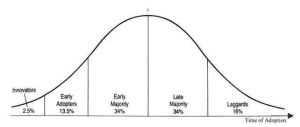
( pic: new technology adoption curve )

Since our products were officially launched in 2013, more and more forward-looking companies have joined us, and the entire SaaS market has become more mature. Of course, in this process, we also encountered a lot of resistance. Today, those early adopters have achieved breakthroughs in all aspects, not only in logistics and transportation management, but also in the forefront of the industry in all aspects of business operations. It’s their attitude of embracing new technologies that determines this.

If you haven’t kept up with the speed, the brave first step is imminent!
Transport Weekly | Low price trap

所属行业
客户规模
核心需求

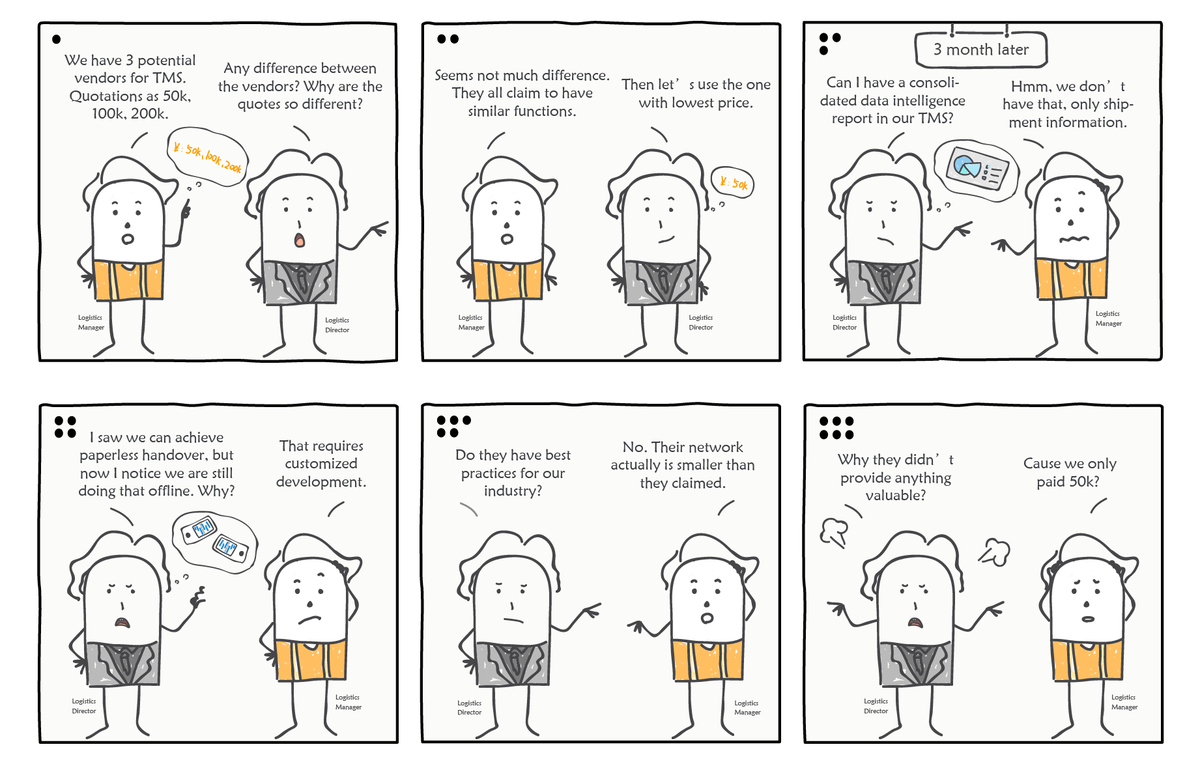
Nowadays, more and more companies are aware of the importance of using digital tools to manage transportation. Many companies are consciously aware that they should choose a TMS and search on the market. In the TMS selection process, the price is obviously a point of concern to everyone. However, from previous experience, if price is taken as the most important consideration, in the end buyer often fall into the low price trap.

The core purpose of investing in TMS for a company is to gain management value. The cost includes not only the cost of software procurement, but also the cost of process reengineering, the cost of implementation and promotion. If you pursue low price or even cost free only which leads to failure of getting expected management value, it is not a cost-effective investment. Lots of previous practice tells us that free lunch sometimes means more investment later. In order to cover own cost, the supplier whose price is far lower than the market price will save money in other ways including develop fewer functions and reduce the after-sales service level, or they will charge additional customization fee later.

Therefore, the primary considerations for TMS selection should be whether the TMS functions match your business, if the solution is perfect, if it’s leading technology, if the user interface is friendly enough, how is their customer support capability, and whether the supplier has platform leadership. These are the real guarantees of the best return on investment in TMS.

Transport Weekly | Hasn’t adopted AI yet?

所属行业
客户规模
核心需求

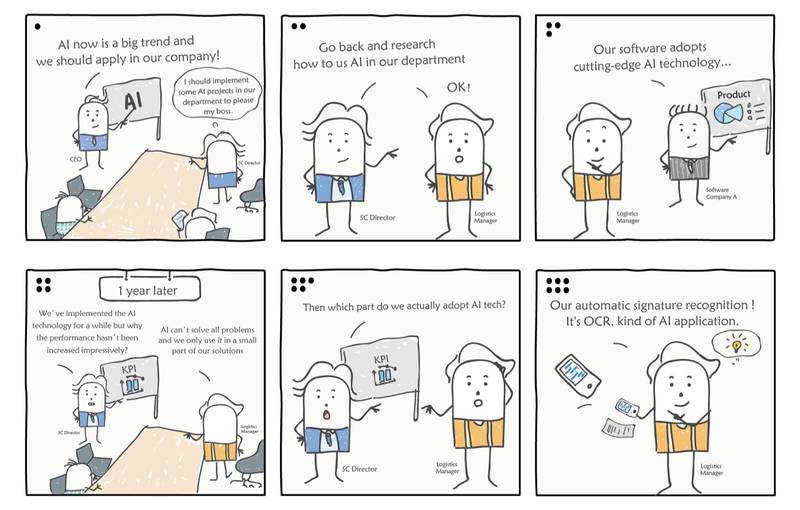
In recent years, with the rapid development of technology, new terms such as big data analysis, artificial intelligence and blockchain have been pouring into the eyes of everyone. It seems that every concept can solve current issues and help us move into a beautiful new world. Taking artificial intelligence as an example, with the scope of AI application becoming more and more extensive, this concept is more and more often mentioned and has even become one of the “Top Ten Chinese Media in 2017”.

Many companies want to apply the latest technology to their management and operations, to ensure that the company does not fall behind. It’s the same for logistics industry. However, limited to the backwardness of informatization and digitalization in the logistics industry, new technologies such as artificial intelligence are often only used as a marketing tool. Suppliers may say they are using cutting-edge AI tech but in real word, the scope of application may still be limited to such small things as Optical Character Recognition (OCR).

Two key factors are required to truly achieve industry innovation through new technologies.
First, change manual operations to achieve supply chain digitization. Data is the basis for all innovation in the information age. If the data is still scattered and remains offline, there is no use talking about optimization through big data analysis and AI. Second, open attitude and unremitting efforts are required from management level. To change the existing offline process is not an easy task. People are always accustomed to familiar operation methods, and often have instinctive rejection of new things. This requires business leaders to have enough determination and skills to promote the popularization of new technologies through various efforts.

In this way, break-through technologies like AI can avoid being turned into empty talk and really landed to serve the transportation industry.